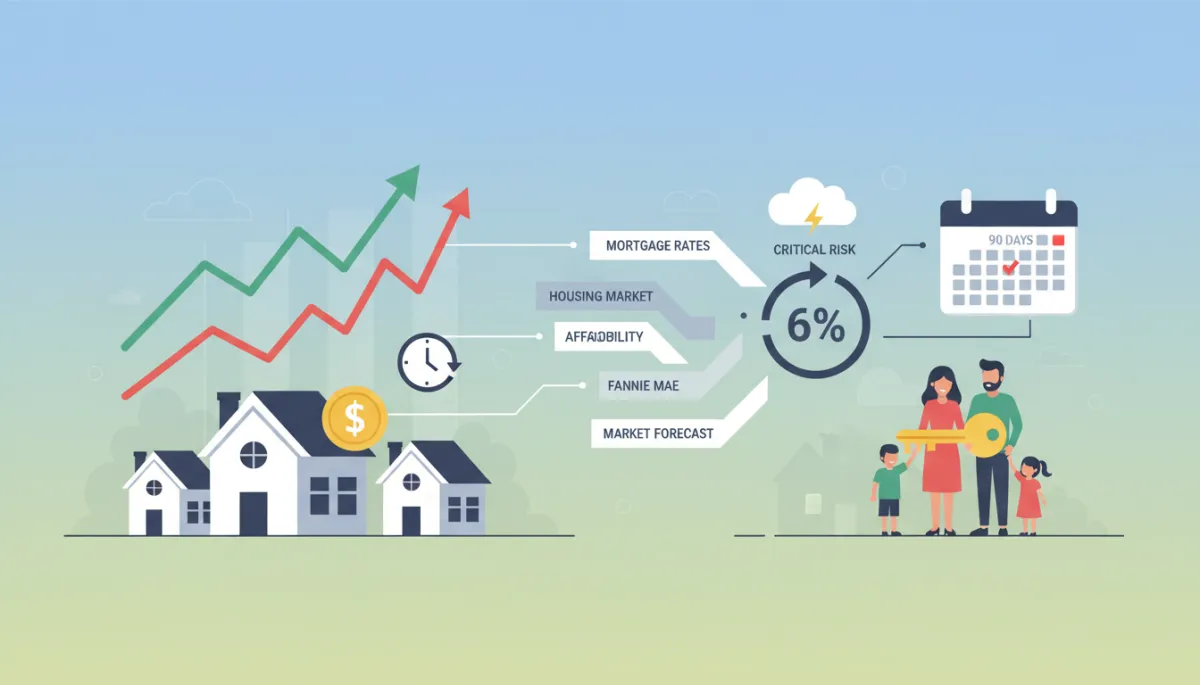
Mortgage Rates & Housing Market: Future Affordability
Mortgage Rates, Housing Market, Affordability, Market Forecast
Mortgage Rates, the Housing Market, and What Affordability Looks Like Next
With mortgage rates hovering in the low‑6% range, many buyers and sellers are wondering whether to move now or wait for a better deal. Here’s what the latest data and forecasts say about the next 90 days—and how that translates into real‑world affordability in today’s housing market.
Mortgage Rates and Your Next Move
Understanding the housing market over the next 90 days
Where Mortgage Rates Stand Today
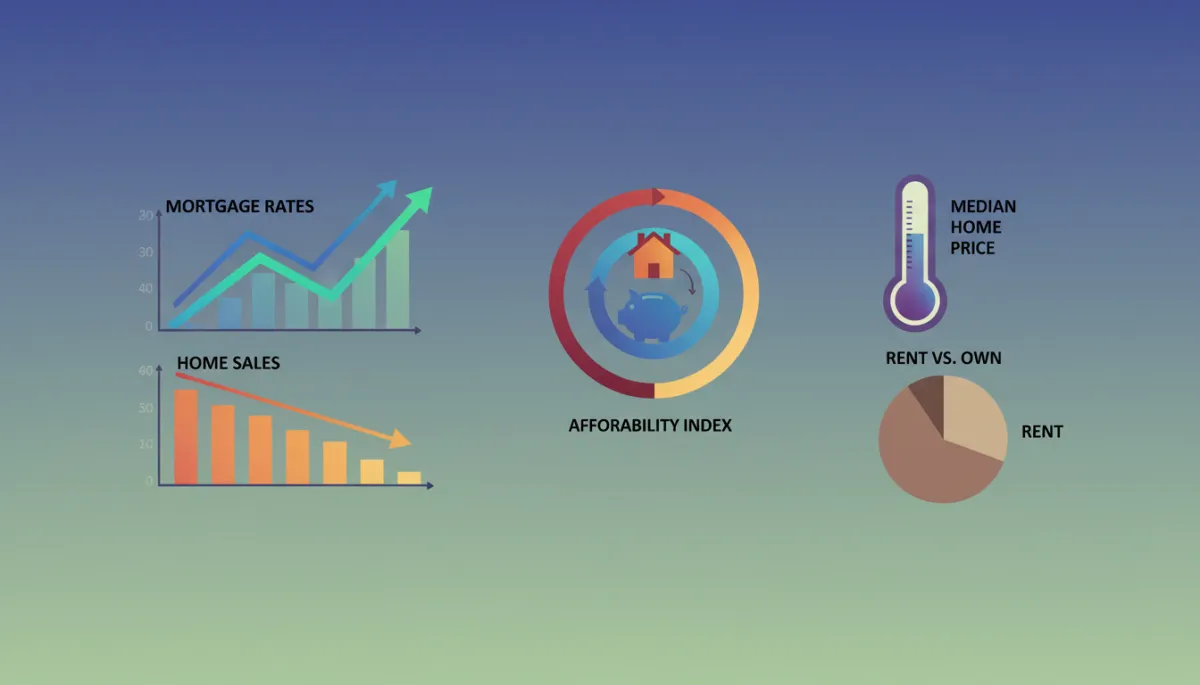
As of mid‑May 2026, national averages for a 30‑year fixed mortgage sit roughly between 6.32% and 6.49%, according to sources like Money.com, Bankrate, and Freddie Mac. Most data points cluster in the low‑6% range, around 6.32%–6.45%. Shorter‑term loans, such as 15‑year fixed mortgages, are lower—generally between 5.65% and 5.88%—but come with higher monthly payments because the loan is paid off faster.
On the forecasting side, both Fannie Mae and Freddie Mac expect mortgage rates to trend gradually downward over the next couple of years, but not in a straight line. Consensus across major forecasters has year‑end 2026 rates in roughly the 5.8%–6.2% range, reinforcing the idea that today’s low‑6% levels are not an outlier, but part of a “new normal” for the near term.
The Next 90 Days: Don’t Expect a Big Drop
Looking specifically at the next 90 days, most market forecasts point to mortgage rates staying close to where they are now. With current 30‑year fixed rates already near 6.3%–6.4%, there is little evidence to suggest a sharp decline in the very short term. Instead, modest day‑to‑day or week‑to‑week movements—up or down—are more likely than a dramatic slide into the 5% range.
In other words, major drops are unlikely over the next three months. Rates are expected to remain anchored in the low‑6% range, perhaps drifting slightly lower or higher, but not enough to fundamentally change affordability for most households in such a short window.
📌 Key Takeaway: If you are waiting for rates to suddenly fall below 5.5% in the next 90 days, current data suggests that is a long shot.
What This Means for Housing Market Affordability
The broader housing market is still wrestling with a combination of elevated prices and limited inventory in many areas. When you layer mortgage rates in the low‑6% range on top of higher home values, affordability becomes a real challenge, especially for first‑time buyers.
However, affordability is about more than just the headline rate. Your credit score, down payment, debt‑to‑income ratio, and the type of loan—conventional, FHA, VA, or jumbo—all influence the actual rate and monthly payment you receive. Even a small rate difference of 0.25% can change your payment, but it usually doesn’t make or break the decision on its own. Home prices, property taxes, and insurance costs often matter just as much.

Comparing monthly payments to a realistic budget is more powerful than chasing tiny rate moves.
The Real Strategy: Focus on Timing, Budget, and Goals
Because significant rate relief is unlikely in the next 90 days, the smartest move is to base your decision to buy or sell on your timing, budget, and long‑term goals, not on trying to outguess the next small rate adjustment.
Timing: Are you relocating, expanding your family, or downsizing? Your life timeline is often more important than a 0.1% change in rates.
Budget: Run the numbers on what you can comfortably afford today, including taxes, insurance, and maintenance—not just principal and interest.
Goals: How long do you plan to stay in the home? A longer stay can justify buying now and potentially refinancing later if rates move lower.
💡 Pro Tip: Think of today’s rate as the cost of entry. If future rates drop meaningfully, refinancing can be your second chance to save.
The Critical Risk: Forecasts Can Shift Fast
While current projections from Freddie Mac, Fannie Mae, and other experts suggest a slow drift lower over time, there is a key risk: rate forecasts can change quickly. If inflation heats back up, if Treasury yields spike, or if expectations about future Federal Reserve policy shift, mortgage rates can move sharply in either direction with little warning.
That uncertainty is exactly why building your plans around your own finances and lifestyle—rather than trying to time the perfect rate—is usually the more dependable strategy. In today’s housing market, clarity about your budget and goals is your best hedge against an unpredictable rate environment.